



While Kutch is most known for its expansive salt marshes and secluded villages, this region is also home to some of the country’s most enduring craft traditions like ajrakh printing, bandhini tie-dye, rogan painting, batik and Kharad weaving, among others.
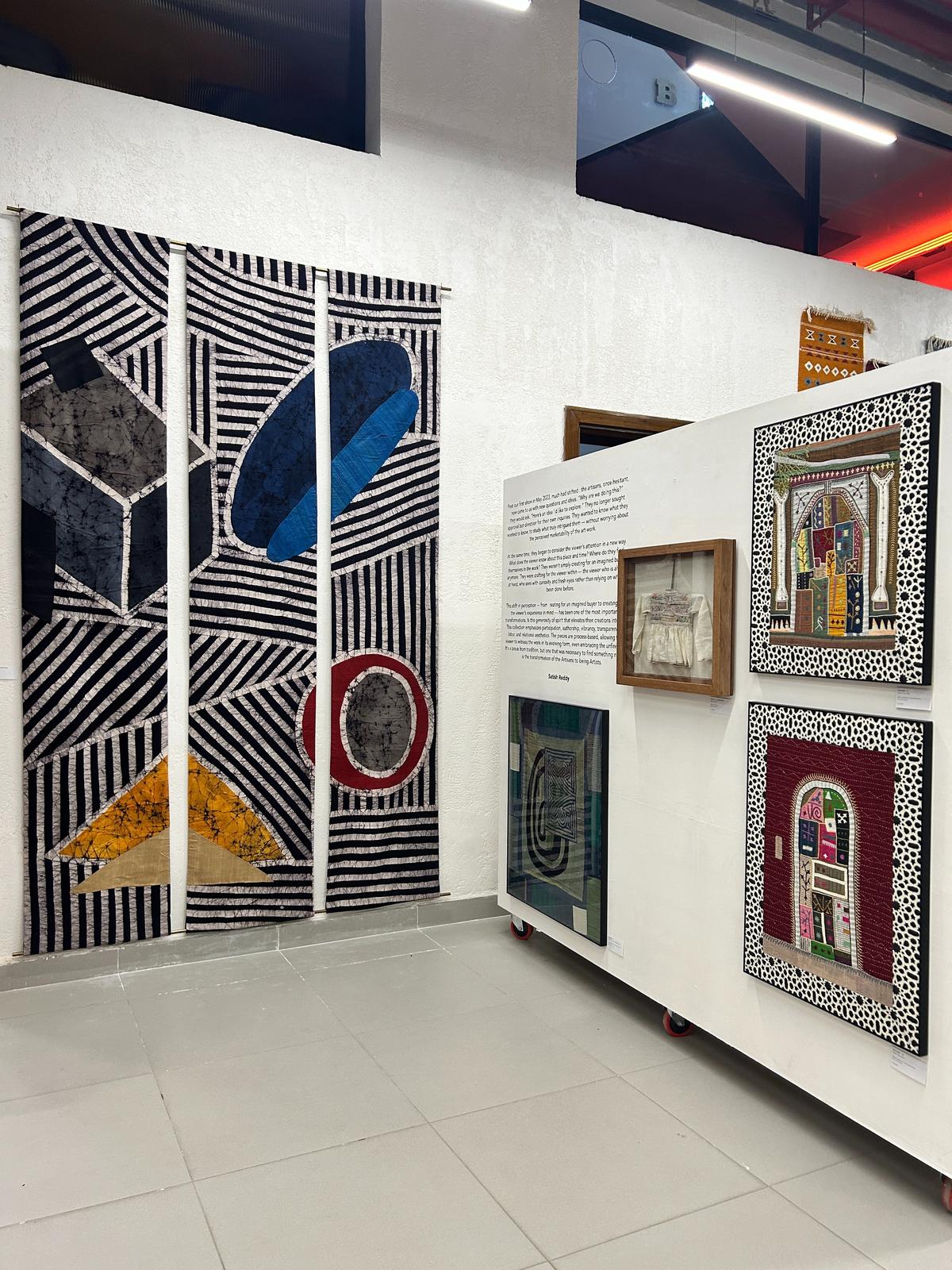
These crafts are often presented as static relics in exhibitions. However, in The Triumph Of Kachchh, presented by design entrepreneur Srila Chatterjee and curated by Satish Reddy in Delhi’s Method Gallery, they are reimagined as living, evolving expressions.
“The inspiration for the show came from seeing artisans shift from repetition to reflection, from making for others to making for themselves,” says Satish.
Triumph of Kachchh at Method Delhi
| Photo Credit:
Special Arrangement
After their first show, Kachchh Born Again in 2023, artisans began asking deeper questions: why they make, for whom, and how their work could inhabit new spaces. At the same time, they also factored in the viewer’s attention, ensuring that they were crafting for someone present who was not just an imagined buyer.
“This exhibition celebrates the triumph of imagination over imitation, of play over prescription. It felt timely because the world of craft today needs to be seen as an evolving conversation; not nostalgia, but renewal,” he adds.
Artistry and experimentation
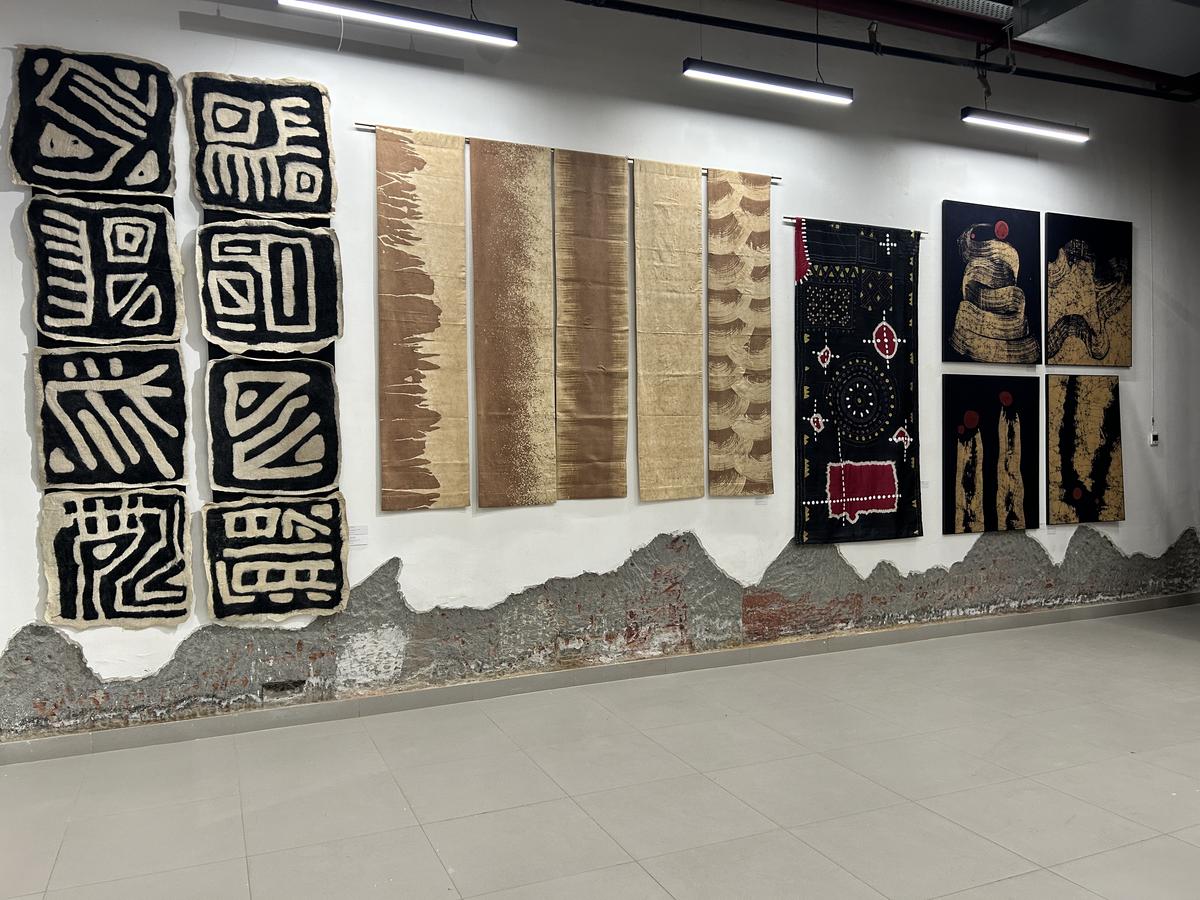
At the gallery in Delhi, visitors will come across work that reflects thought as much as skill. Khalid Amin Khatri’s ajrakh prints flow like gestural calligraphy, moving away from the defined grids of traditional patterns. There is also Rizwan Khatri’s rogan paintings where humour and narrative shine through. His oil-based works take inspiration from everyday life, be it ceremonies, Nature or even his own courtyard.
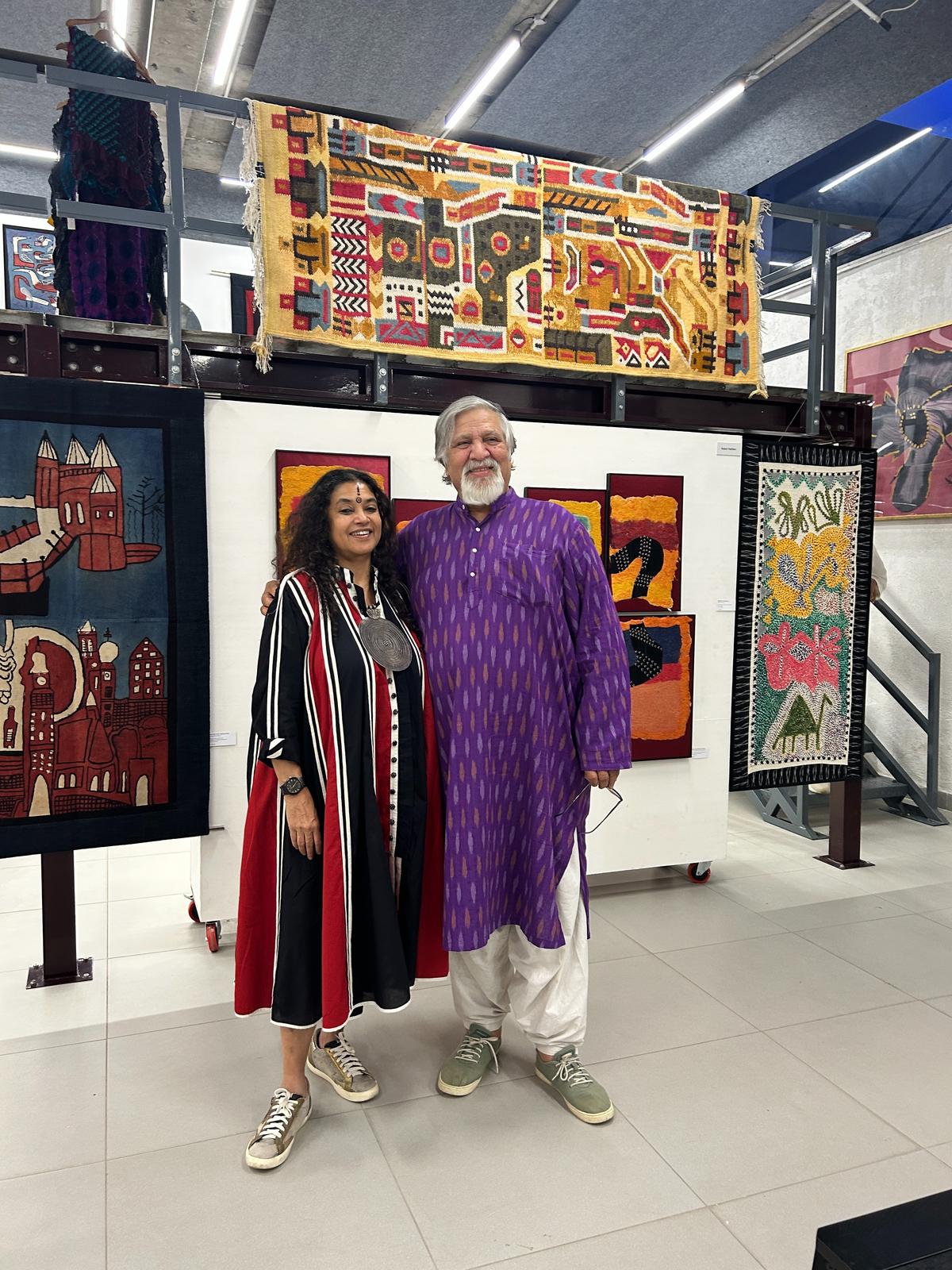
(Left) Srila Chatterjee
| Photo Credit:
Special Arrangement
Shakil Khatri, known for batik, layers colour and geometry to create bold patterns, transforming the craft into a medium of cultural significance. Using traditional wax-resist techniques as a base, he invites viewers to look past the surface and discover complexity in every fold and brushstroke.
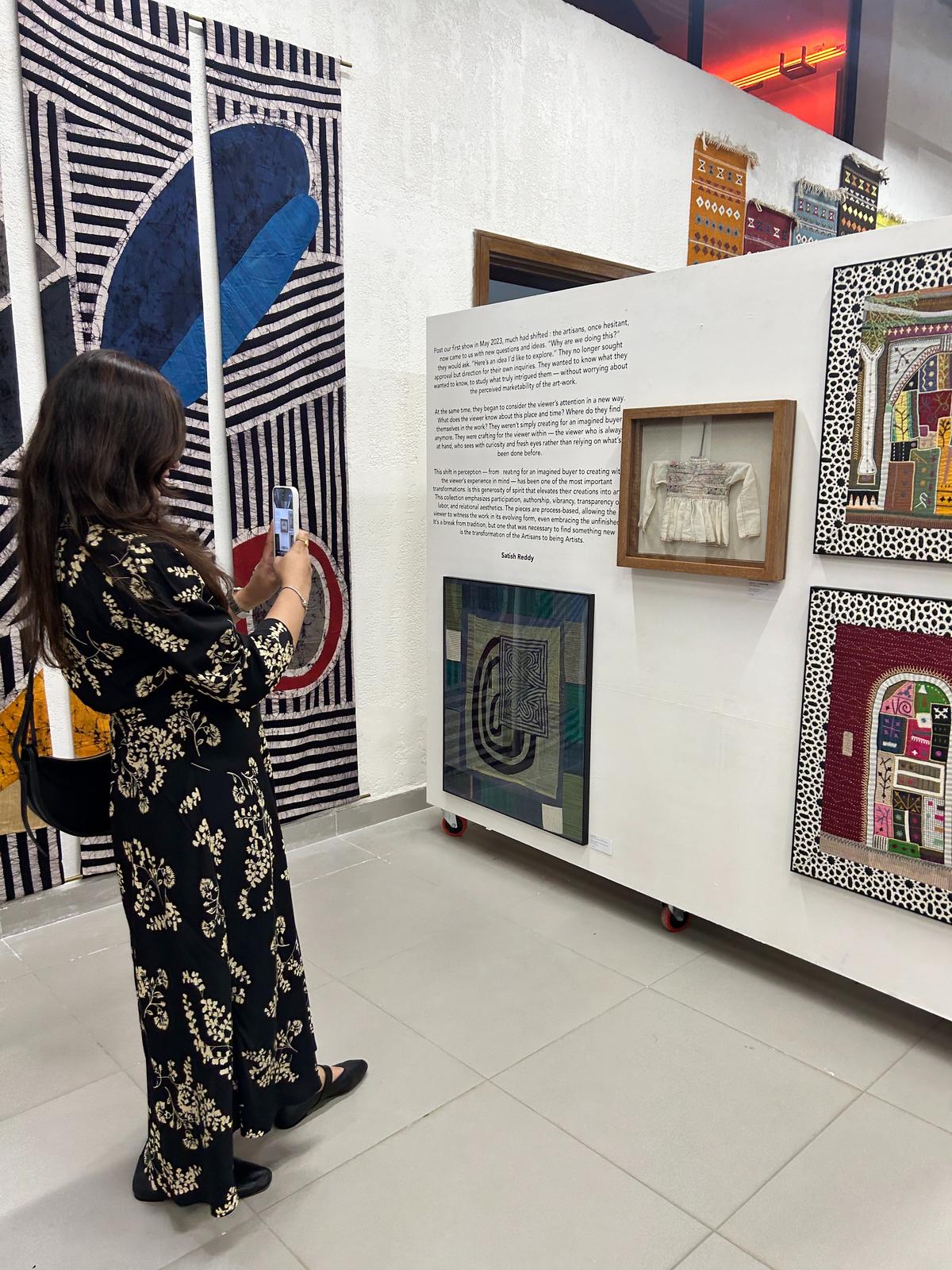
Meanwhile, Rabari artisans Kuvarben and Pabiben weave in personal stories in their embroidery, with every stitch being a symbol of their thoughts and rhythm.
Aafasil Luhar’s metalwork, on the other hand, takes a detour from the family’s traditional copper-bell craft and instead bends and twists metal into whimsical forms. Though these works are made from iron, Luhar adds a fine copper coating to each piece for a vibrant, marble-like sheen.
Authorship, transparency and relational aesthetics are central to the exhibition. In fact, the show emphasises process as much as outcome, highlighting the unfished as part of the narrative.
“The unfinished carries truth. It speaks of transition, where intention meets uncertainty. We wanted to reveal those edges, those visible seams of thought,” shares Satish. “Authorship in that sense became about presence and awareness than ownership.”
At this point, cross craft experiments may not be as prevalent but there are a few examples. A namda artisan experimented with an embroiderer on textures, while a bandhini maker exchanged ideas with a colleague to create hybrid surfaces.
Triumph of Kachchh at Method Delhi
| Photo Credit:
Special Arrangement
By foregrounding process and deliberate choice, the exhibition allows viewers to connect with human labour and decision-making behind each creation. The traces of hands, the visible deliberations, and even the pauses make the work feel alive.
Living tradition and fresh perspectives
The exhibition balances respect for heritage with an openness to innovation. “Tradition is a language, not a rulebook,” says Satish.
When Khalid’s ajrakh flows with calligraphic gestures or Ramesh Marwada’s Kharad weaving embraces circles and shadows, history becomes a living grammar.
Younger artisans and even women find space here. There’s Meeya and Zuma Kasam’s ari mochi embroidery, Karim Mansuri’s wool felting, and Sakina Pathan’s geometric reinterpretations of Pathani embroidery – each demonstrating how craft can remain rooted while evolving.
Triumph of Kachchh at Method Delhi
| Photo Credit:
Special Arrangement
“I never imagined my embroidery could hang in a gallery,” says Kuvarben, reflecting on the recognition of her work in a new context.
It is these moments when traditional craft finds its way into unexpected spaces that are at the heart of The Triumph of Kachchh. “Something like this shows craft is not only about preservation but dialogue, curiosity, and the courage to take risks, while staying rooted in tradition,” says Satish.
The exhibition is on view until October 12 at Method Delhi, Basement, D-59, Defence Colony, New Delhi
Published – October 10, 2025 02:43 pm IST
