


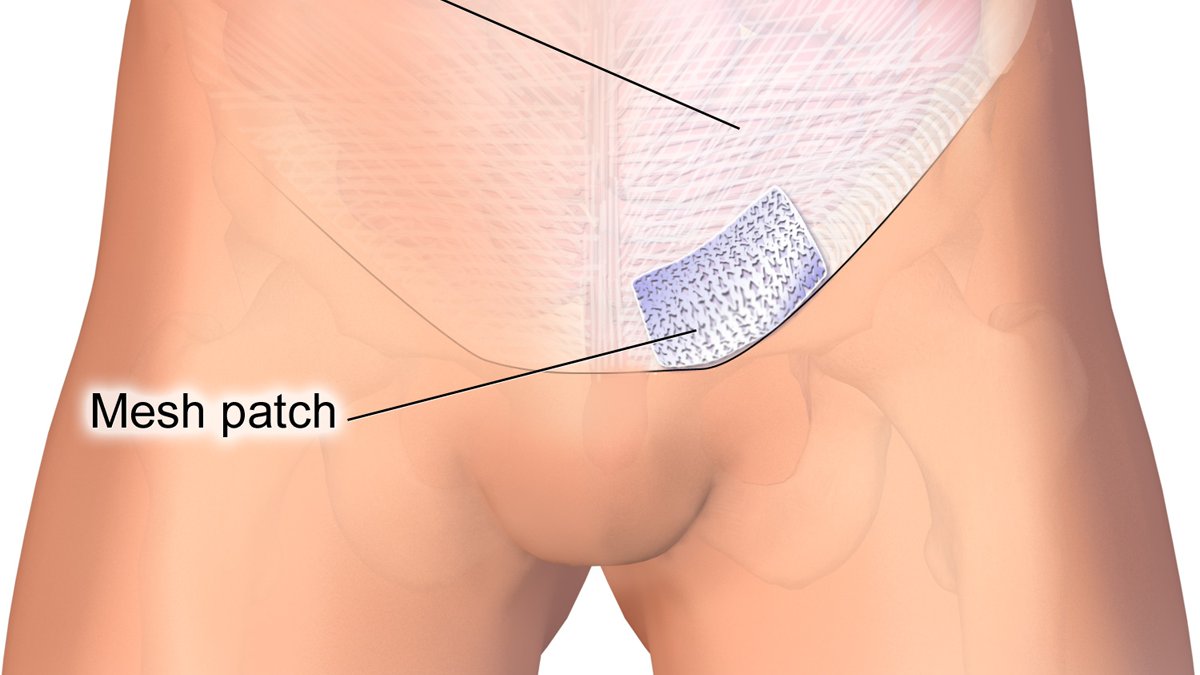
A hernia happens when a portion of an internal organ— usually the intestine—protrudes through a weak point in the connective tissue or abdominal wall
| Photo Credit: By BruceBlaus – Own work, CC BY-SA 4.0, https://commons.wikimedia.org/w/index.php?curid=46636556
A hernia often begins as a small and harmless swelling that adults generally ignore. It usually disappears when they lie down, but it can appear when they carry a heavy object, cough, or stand for extended periods of time. Most individuals do not consider the pain associated with it to be a serious problem, because it is mild. However, if left untreated, this seemingly benign condition could cause complications that could even be fatal.

Understanding hernias
A hernia happens when a portion of an internal organ— usually the intestine—protrudes through a weak point in the connective tissue or abdominal wall. Congenital or acquired abnormalities from ageing, obesity, previous surgeries, or high levels of physical activity might cause this weak area. Hernias most frequently develop around surgical scars (incisional), in the groin (inguinal), or around the navel (umbilical).
One potentially dangerous complication is when a portion of the intestine becomes trapped in a hernia, a condition known as incarceration. If that part of hernia loses its blood supply, strangulation can take place, which is a surgical emergency. In such cases, the affected tissue can perish, resulting in intestinal obstructions, infections, and occasionally sepsis. The only option available at that time is emergency surgery — if this is not done in time, it could endanger the patient’s life.

How it happens
A case of a 70 -year-old man illustrates how a hernia can become life-threatening. The elderly man had a swelling in his groin area for many years, but did not pay much heed to it, as it didn’t cause pain. At one point however, he experienced excruciating abdominal pain and vomiting one evening. The pain was so severe that he was admitted to emergency care at a hospital, where doctors found after investigations that he had a strangulated inguinal hernia with a dead bowel. Emergency surgery were carried out but patient required ICU admission and a long stay in hospital. The patient made a full recovery after surgery, but it is crucial to note that early symptoms must not be ignored.

Hernia repair
There are currently advanced, minimally invasive hernia repair methods available in modern medicine. In most cases, laparoscopic and robotic procedures are now the preferred option. These methods reinforce the abdominal wall with a surgical mesh and use tiny incisions to implant a camera and equipment to fix the problem. Patients benefit from reduced discomfort following surgery, fewer scars, and—most importantly—a quicker recovery, frequently returning home in 24 to 48 hours. A more specialised restoration of the abdominal wall is an alternative option to support long-term stability and function in cases with complicated or recurrent hernias.
It is advised to plan a surgery at the earliest once a hernia is diagnosed, instead of waiting until there is an emergency. An early repair gives good outcomes, fast recoveries and ensures no recurrence.
(Dr. Shivaji Ramchandra Vibhute is consultant, laparoscopic, general, colorectal surgeon| at Manipal Hospital Kharadi, Pune. Shivaji.vibhute@manipalhospitals.com )
Published – November 10, 2025 08:01 pm IST
